


The future is already teaching
From learning lessons to shaping them
Generation Z is gradually taking on a new role in education. Once discussed primarily as the generation transforming the student experience, its members are now entering classrooms themselves — this time as educators.
For young teachers, that position comes with an unusual perspective. They remember relatively recent experiences of being high schoolers themselves. Now they are re-entering schools with the responsibility for the students of their own, while simultaneously learning what happens on the other side of the classroom: lesson planning, assessment, communication, and the importance of adaptability.
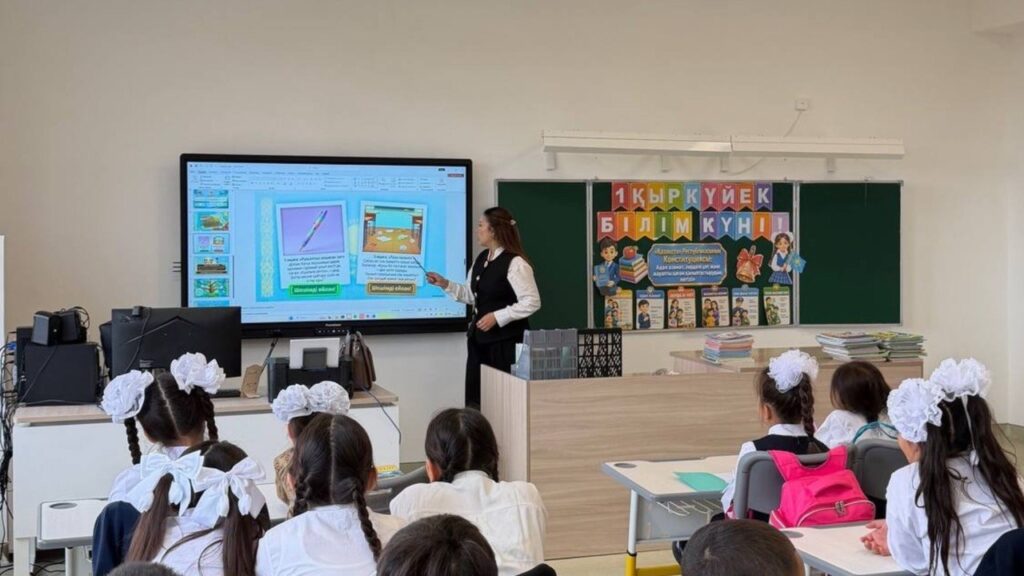
Indira Shambilova, 22, has been working with primary school students for three years. For her, one of the clearest differences between own learning experience and that of Generation Alpha is access to information.
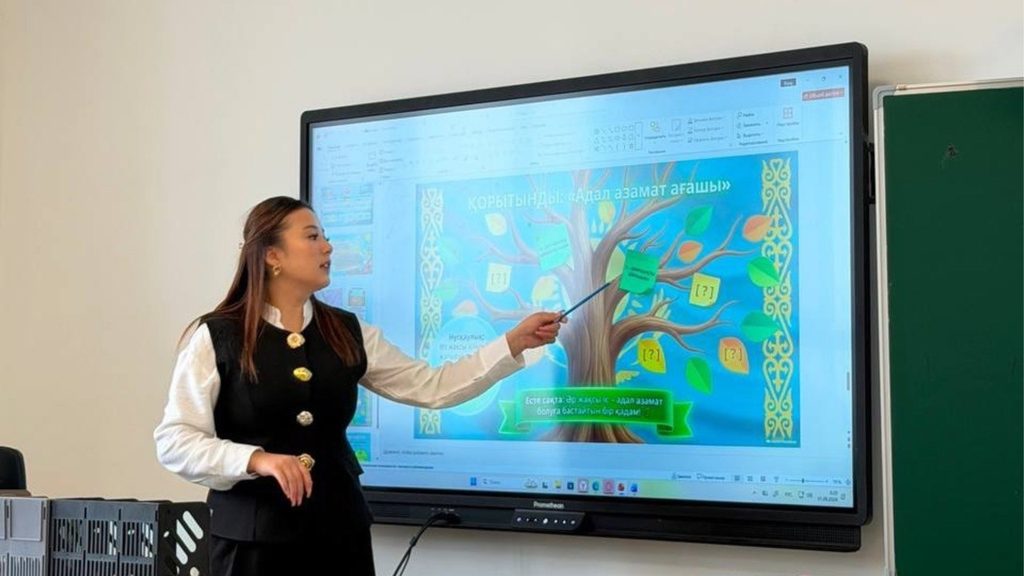
“We used to ask the teacher, look in books, or seek help from our parents to obtain specific information. Today’s children, however, can access any information within seconds. From an early age, they are learning to gather information through the internet, social media, YouTube, various apps, and now, artificial intelligence,” she says.
That change has also forced her to reconsider what a teacher is supposed to provide. When information itself is instantly available, simply delivering it is no longer enough.
“The teacher’s role is to help the child find the right direction amidst the vast flow of information, analyze that information, and correctly apply the knowledge gained,” she believes.
Elizaveta Sukhorukova, 24, who teaches history to students in middle school, has experienced another side of this transition. Rather than seeing today’s students as fundamentally different, she notices a shift in how some of them approach academic achievement.
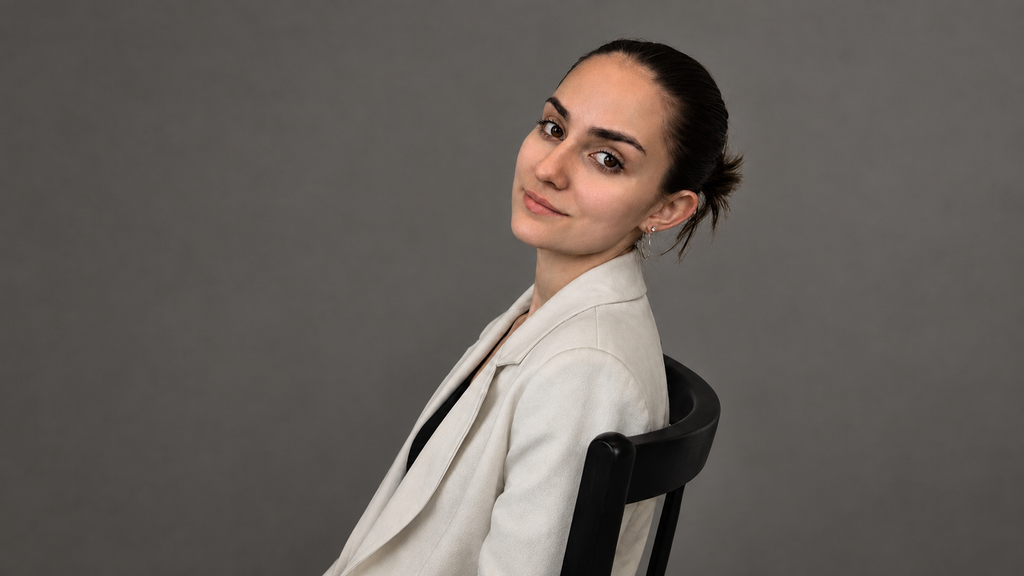
“Back in my days, there weren’t any classmates who got C and were unbothered by it. In fact, there weren’t nearly as many students failing — getting D or F — as there are now,” Elizaveta says.
For young educators, then, entering the profession also means discovering that the classroom they remember as students is not necessarily the classroom they will teach in.
Changing ways
A new generation brings new methods suited to modern approaches and needs. However, while old classics may be interpreted in various ways, they will always remain in use. For Shambilova, adapting to students means becoming more flexible in the way she teaches. Primary school students surrounded by digital content may respond differently to long explanations or traditional lesson structures.
“I try to use various methods to keep the child engaged during the lesson: game-based elements, movement-based activities, visual aids, and group or creative work,” she says.
Her approach, however, is not simply about making lessons more entertaining. As she has developed professionally, Shambilova has also become more selective about when new methods are actually useful.
Methodology itself should not be the goal. The most important thing is to use it correctly according to the purpose of the lesson,” she highlights.
That distinction is central to her understanding of modern teaching. Interactive activities, technology, and project-based assignments may help, but they are tools rather than substitutes for pedagogical judgment. Shambilova’s views on assessment have evolved in a similar direction.
“Grades can show a certain level of achievement, but they cannot fully reflect a child’s creativity, interests, effort, or ability to think independently,” she says. “It is important to pay attention not only to assessment but also to a child’s development over time, the learning process, and their individual achievements.”
This makes teaching less about following a fixed formula and more about making constant professional decisions: when to change an approach, when to use technology, when to challenge a student, and when a different method may be more effective.
“Teachers should have the freedom to meet educational requirements while also taking each child’s individual characteristics into account,” she says.
When Gen Z teaches Gen Z
At the university level, the generational distance can become even smaller. Vladislav Saiko, a senior lecturer at the School of Liberal Arts and a professional conference interpreter, teaches students who belong to the same generation as he does.

Having only recently been a university student himself gives Saiko an immediate understanding of cultural references, pressures, and communication habits his students bring into class. The more significant transformation for him has been moving from receiving an education to designing one.
As a student, he encountered classes, assignments, and feedback as finished parts of a course. Becoming an instructor revealed the work behind them: assessment decisions, communication, coordination, and the preparation required to make a classroom function. That shift has influenced the kind of teacher he wants to become.
For Saiko, students should not simply receive information. Because he works with future translators and interpreters, he tries to create situations in which they have to apply knowledge, make decisions, and respond to circumstances resembling their future professions.
“I want students to discuss ideas, solve cases, make decisions, and then test those decisions in situations that resemble their future work,” Saiko says.
This is also why he does not consider lectures themselves outdated. What matters is what the teacher adds to the information students could otherwise access independently.
“If students can read the same text on their own, we should think carefully about what being together in a classroom adds,” he says.
The question places responsibility back on the educator. A classroom needs to offer something beyond information — discussion, interpretation, feedback, practice, or the opportunity to test an idea. Being relatively close in age to students creates another challenge for young educators: finding the line between relatability and authority.
For him, authority does not have to come from distance. This way students can feel comfortable disagreeing with an idea or asking questions while still understanding that assessment decisions are based on their work.
“I can use humor, understand my students’ references, and have a warm classroom atmosphere while remaining clear about expectations, assessment, and boundaries,” Saiko says.
Additionally, to the argument that younger lecturers are more ‘in-demand’ when it comes to connecting with students, Saiko disagrees, saying that age is not the primary factor when it comes to education.
“I would be careful about saying that older-generation instructors do not understand today’s students. Many of my colleagues have years of experience and are very attentive to changes in education,” he explains.
Learning never stops
Despite working at different levels of education, Indira and Saiko arrive at a similar understanding of the profession. The modern teacher does not have to perform the role of a person that possesses every answer, because their responsibility increasingly lies in helping students navigate information, evaluate it, ask better questions, and learn how to think independently.
For Shambilova, this transformation also means accepting that teachers themselves cannot stop developing. At the same time, technological development does not eliminate the qualities she considers fundamental to education.
“Today’s teacher does not have to be someone who knows everything. They should be someone who learns alongside their students, asks the right questions, provides guidance, and gives children the opportunity to think independently,” she added. “The school of the future should be technologically advanced, but its approach to people should remain warm and human.”
Saiko’s experience leads to a similar conclusion. He wants students to leave his classroom not only with information but also with the ability to use it, defend their decisions and think critically about their own work. Some of the most impactful evidence, for him, appears only after the students leave his classroom.
“Some of the most meaningful moments for me happen after graduation, when I meet a former student and they tell me that something we discussed in class has stayed with them or helped them in their career. It reminds me that the effect of teaching is not always visible at the end of a lesson. Sometimes you see it years later,” he says.
For a generation of educators entering the profession during rapid technological and cultural change, perhaps that is the most important shift of all. Their youth may make some parts of the contemporary classroom more familiar, but being a good teacher still requires learning how to guide, challenge, and understand other people.
“The teacher of the future should not be a teacher who knows everything but a teacher who never stops learning,” Shambilova says.
What about AI?
Artificial intelligence has made that process of adaptation even more visible. Shambilova thinks prohibiting AI would do little to prepare students for the environment in which they are already learning. In her opinion, teaching students how to evaluate and use AI as increasingly part of an educator’s responsibility.
“Rather than telling students, ‘Don’t use AI,’ it is more important to teach them how to use AI correctly,” she notes.
She also uses AI herself to generate ideas, prepare materials, and adapt content. In this sense, technological change affects not only what her students do, but how she develops her own teaching practice. Yet the more technology can provide information, the more she believes teachers need to concentrate on what technology cannot provide.
“AI can provide an answer, but a child’s ability to understand that answer, ask questions, verify information, and form their own opinion will remain an important human ability,” Shambilova believes. “Technology should not replace the teacher. Instead, it should be a tool that makes the teacher’s work easier.”
The human part of teaching — understanding a student’s mood, recognizing when they need support, motivating them, and responding to individual needs — becomes more important rather than less important when information itself is easy to obtain. That is also why Shambilova does not see technological confidence as something that automatically makes younger teachers better educators.
“Young teachers may be more familiar with technology, while experienced teachers have extensive pedagogical experience, patience, and a deep understanding of working with children,” she says.
AI has made that question even more relevant at university. Students can now produce an answer almost immediately, but Saiko argues that obtaining an answer and knowing what to do with it are different abilities.
“A quick answer is valuable, but knowing what to do with it is a different skill,” he says.
Saiko himself uses AI to organize material, synthesize information, develop classroom ideas, and explore terminology. However, incorporating AI into his own practice has also required him to decide where its acceptable use ends.
“I draw the line where a student presents work generated by AI as evidence of their own knowledge or analysis when that is what the assessment is meant to measure,” he explains.
The important question, for him, is whether students understand what they submit and can explain and defend their decisions.
MNU Newsroom will further explore the topic of AI in education in the upcoming articles.
